
Subtotal ₱0.00

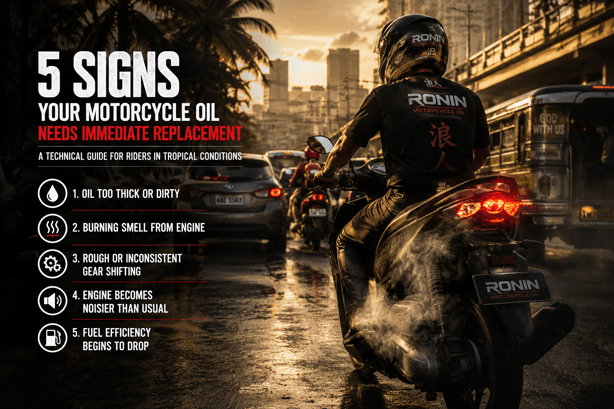
Motorcycle engines operating in tropical environments face significantly higher levels of stress compared to motorcycles used in cooler climates. In countries such as the Philippines, riders deal with extreme heat, stop-and-go traffic, high humidity, flooded roads, and long idle times on a daily basis. These conditions accelerate oil degradation and reduce engine protection much faster than many riders realize. Unfortunately, most motorcycle owners only change their oil based on mileage intervals while ignoring the actual condition of the lubricant. Understanding the warning signs of oil breakdown can help prevent costly engine damage, overheating, and premature wear. Here are five important signs that your motorcycle oil may need immediate replacement.
The Oil Has Become Excessively Thick or Dirty
Dark oil alone is not always a problem. Modern engine oils are designed to collect contaminants and combustion byproducts during operation. However, when the oil becomes excessively thick, sludgy, or heavily contaminated, lubrication performance begins to decrease. In tropical riding conditions, oil oxidation occurs faster due to constant exposure to high temperatures and traffic congestion. Riders who frequently travel short distances or spend long periods in traffic may notice faster oil contamination compared to highway riders. If the oil appears unusually thick or dirty during inspection, it may no longer provide adequate protection for engine components.
You Notice a Burning Smell from the Engine
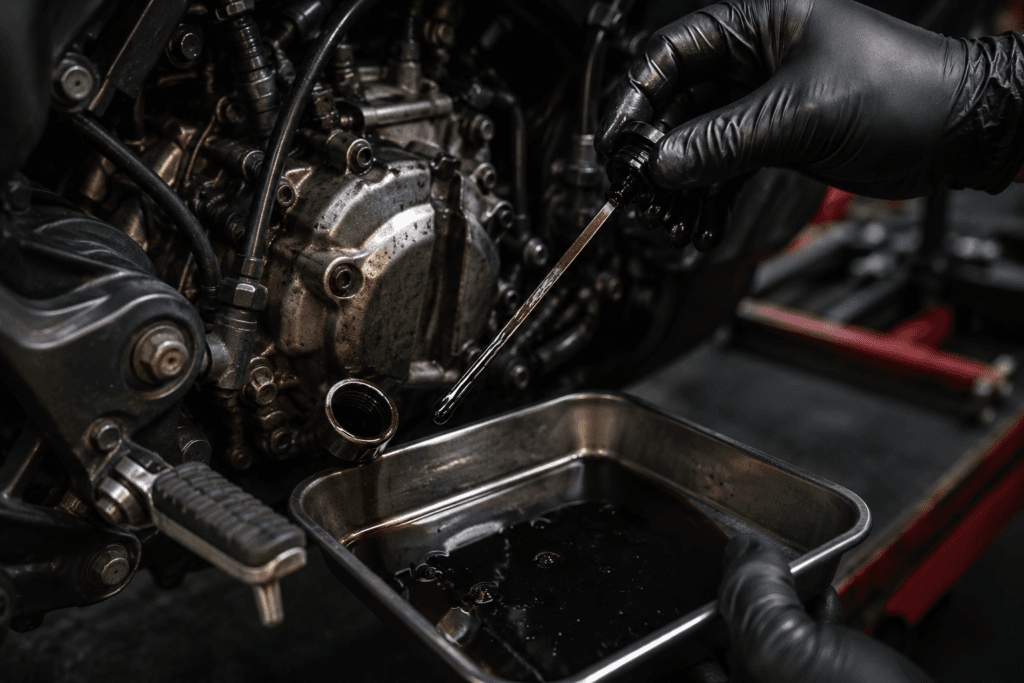
A burning smell coming from the engine area is often a warning sign of thermal stress or oil breakdown. Motorcycle oil plays a critical role in cooling internal engine components and reducing friction. Once the lubricant begins losing its thermal stability, engine temperatures may rise beyond normal operating conditions. This issue becomes especially common in densely populated urban environments where motorcycles spend extended periods idling in traffic. Excessive heat can accelerate viscosity breakdown and increase metal-to-metal contact inside the engine. Ignoring these symptoms may eventually lead to serious mechanical damage.
Gear Shifting Feels Rough or Inconsistent
For motorcycles using wet clutch systems, engine oil directly affects clutch and transmission performance. One of the most common signs of degraded oil is rough or delayed gear shifting. Riders may notice: harder shifting delayed clutch response inconsistent gear engagement increased vibration during acceleration In many cases, these symptoms appear before riders realize the oil itself is already losing effectiveness. Motorcycles operating in tropical climates often experience faster viscosity loss due to continuous exposure to heat and heavy urban traffic conditions.
The Engine Becomes Noisier Than Usual
Modern motorcycle engines rely on a stable lubrication film to minimize friction and protect moving parts. As oil degrades, this protective film becomes weaker, allowing increased mechanical contact between components. A noticeable increase in engine noise, ticking sounds, or metallic vibration may indicate reduced lubrication performance. This is particularly important for high-revving motorcycles and heavily used commuter bikes that operate daily under demanding conditions. Routine oil inspection and timely replacement remain among the simplest ways to reduce long-term engine wear.
Fuel Efficiency Begins to Drop
Many riders do not immediately associate poor fuel economy with engine oil condition. However, degraded oil increases internal engine resistance and friction, forcing the engine to work harder during operation.
As lubrication efficiency decreases:
engine temperatures rise
mechanical drag increases
combustion efficiency may decline
The result is often reduced fuel efficiency and less responsive engine performance.
In tropical cities where motorcycles constantly accelerate and decelerate in traffic, maintaining proper oil condition becomes even more important for both performance and economy.
Tropical Riding Conditions Require Better Engine Protection Motorcycles in tropical regions face unique environmental challenges that place additional stress on engine components and lubricants. Heat, humidity, traffic congestion, and inconsistent road conditions can dramatically shorten oil life compared to standard operating environments.
For this reason, riders and professional workshops should prioritize oils designed for thermal stability, shear resistance, and long-lasting protection under demanding conditions.
At Ronin Oil, our formulations are developed with real-world tropical riding environments in mind — helping riders maintain consistent engine performance, smoother operation, and reliable protection even under extreme conditions.